
How to Build an Effective SEO Strategy for Arabic-Speaking Markets
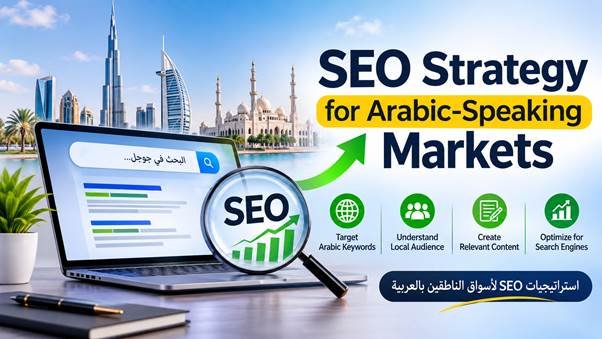
Arabic is one of the most widely spoken languages online, yet high-quality Arabic content remains surprisingly scarce in search results. Many businesses still rely on machine-translated pages or treat Arabic as an afterthought to their English site, which leaves a real opportunity for brands willing to do it properly.
Ranking in these markets requires more than translation. It calls for an understanding of dialects, search behaviour, technical setup and local culture, which is why many companies choose to work with an experienced Arabic SEO agency UAE.
Here’s what you should do to create an SEO strategy to target Arabic-speaking markets:
1. Research Keywords Natively
Translated keywords rarely match how people actually search. Arabic users may search in Modern Standard Arabic, in a regional dialect, in English, or in Arabizi, where Arabic words are typed using Latin letters and numbers.
A single product can have several popular search terms depending on the country. Keyword research should therefore be carried out in Arabic from the start, ideally by native speakers who understand regional nuances.
2. Prioritise Your Markets
The Arabic-speaking world is not a single market. Search behaviour in the UAE, where many users switch between English and Arabic, differs considerably from Saudi Arabia or Egypt, where Arabic searches dominate.
Decide which countries matter most to your business, then build separate keyword sets and content plans for each rather than relying on one generic Arabic version.
3. Get the Technical Foundations Right
Arabic websites have specific technical requirements that directly affect rankings and user experience:
- Right-to-left layouts that display correctly on every device
- Accurate hreflang tags, such as ar-AE and ar-SA, for each regional version
- Translated title tags, meta descriptions and image alt text
- Clean, consistent URL structures for Arabic pages
- Fast loading times, with mobile performance treated as a priority
Errors at this stage can undermine even the strongest content.
4. Create Original, Localised Content
Content should be written for Arabic readers rather than converted from English. Features of Professional Portable Radios That means adapting tone, examples and cultural references, and aligning publishing schedules with key regional moments such as Ramadan, Eid and national days, when search demand often shifts significantly.
Original, helpful Arabic content also stands out in a landscape where competitors frequently publish thin, translated pages.
5. Build Local Authority
Backlinks from Arabic-language news sites, regional directories and respected industry publications help search engines recognise your relevance in each market. A fully optimised Google Business Profile in both Arabic and English supports local visibility too.
Proven experience in building this kind of regional authority is one of the first things worth checking when comparing providers to find the best SEO agency Dubai.
6. Measure Each Language Separately
Track Arabic and English performance independently, segmenting rankings, traffic and conversions by language and country. Reviewing the Arabic queries that bring users to your site often reveals new dialect terms and content gaps worth targeting next.
Succeeding in Arabic-speaking markets depends on treating Arabic SEO as a strategy in its own right. Native keyword research, clear market priorities, sound technical foundations, culturally relevant content and locally earned authority all work together to build visibility that lasts. Businesses that commit to these principles are well placed to reach one of the most valuable and underserved audiences online.